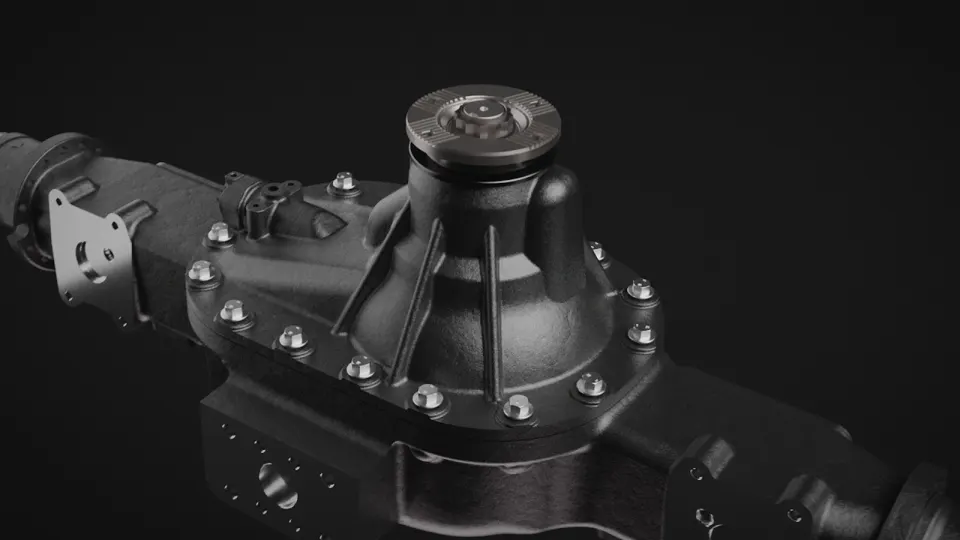
3D animation has become the most effective way to explain an idea, a product or an industrial process in today's digital world. Neuroscience research conducted at MIT (Massachusetts Institute of Technology) shows that the human brain can process and make sense of an image it sees in as little as 13 milliseconds. This processing speed, faster than the blink of an eye, makes it clear why high-quality visuals should be preferred over text in corporate marketing and presentation strategies. This is exactly where this technology, which brings imagination and engineering together, comes into play. So what exactly is this technology that has become indispensable for corporate companies and industrial manufacturers in recent years, what stages does it consist of, and why is it vital for your project?
The Core Stages of 3D Animation: The Journey from Idea to Screen
A professional 3D animation studio follows specific technical processes when it takes a raw idea and turns it into a cinematic masterpiece. This process involves much more than just modeling at a computer:
- Modeling: This is the stage where the digital framework of the product, machine or character that will appear in the animation is built mathematically in three-dimensional space. In industrial manufacturing in particular, digitizing CAD data faithfully to reality is critically important.
- Rigging: This is the process of giving modeled objects mechanical joints and the ability to move. The rotation of a machine's gears or the opening of a product's covers is planned at this stage.
- Animation: This is the stage where objects are set in motion and brought to life on the timeline. Smooth, realistic movements that obey the laws of physics come to life in this step.
- Texturing & Lighting: This is the most important step for adding realism to the design. The textures of surfaces such as metal, plastic or glass are created, and virtual lights are placed to give the scene depth.
- 3D Rendering (Visualization): This is the process in which the computer processes all of this data and converts it into pixels, that is, the final video frames. At this stage, which requires high processing power, every detail of the project comes into focus.
The Power of 3D Animation in Industry
Before a product has even left the production line, showing how it works, the engineering details of its internal mechanism or the benefits it will offer the customer is normally impossible. With professional 3D animation services, however, you can remove those limits entirely.
Industrial animations produced especially for trade shows, product launches, investor presentations and social media content allow you to explain complex mechanical processes in seconds, in the simplest and most compelling way. Every sector, from heavy industrial machinery to microchips, benefits from the prestige and persuasive power this visual strength creates.
The Future of 3D Animation and AI Integration
As technology advances rapidly, the world of 3D animation is also undergoing a major transformation. AI-powered render engines and real-time visualization technologies in particular are noticeably speeding up production processes. Complex rendering jobs that used to take days can now be completed in hours, or even minutes, thanks to powerful workstations and optimized algorithms.
This allows corporate companies to make more flexible and dynamic decisions in their marketing operations. Realistic textures, physics-based simulations and smooth camera movements strengthen the bond the target audience forms with the product. In the future, as augmented reality (AR) and virtual reality (VR) platforms become more widespread, the impact of 3D animation will no longer be limited to screens; it will become an interactive experience.
Why Should You Choose a Professional Partner?
Well-crafted visual content directly reflects your brand's corporate identity and quality. Working with a team that closely follows innovations in the industry and offers dynamic, interactive solutions is the single biggest factor in your project's success.
The most critical point here is that every sector has completely different dynamics and technical needs. Simulating the mechanical operation of a massive heavy-industry machine and making the fabric texture of a luxury armchair almost tangible on screen call for entirely different digital approaches. As an example of the sector-specific solutions we develop, you can take a look at our technical guide Using Procedural Materials for 3D Visualization in the Furniture Industry, where we explain in detail how we achieve photorealistic textures.
Sustainability in 3D Technology: One Investment, Unlimited Digital Assets
The world of 3D offers much more than watching passive videos or looking at static images. The biggest cost mistake corporate companies make in traditional marketing is setting aside a production budget from scratch for every new catalog, every new commercial or every web project. With professional support, however, a 3D model prepared to universal 3D asset standards becomes a lasting, sustainable digital investment for your brand.
A product modeled once on the right foundation can be used in your video animations, in your printed catalogs and, at the same time, interactively on your website. In other words, you don't have to pay similar costs over and over again for the same product.
The most exciting step of this vision, and the one that directly affects sales, is giving your customers the freedom to design their own products live on your website. The app.mehmettorni.com platform, where we bring our boundary-pushing web-based interactive projects to life, serves exactly this purpose.
If you would like to experience first-hand what your customers will feel when they change the fabric type, wood color or product parts in real time in a digital showroom, you can test our Interactive 3D Furniture Configurator, which we built for you, directly in your web browser.
Our 3D animation projects, which to date have enhanced the digital showrooms of dozens of corporate companies across different branches of industrial manufacturing, clearly demonstrate the direct contribution the right technical foundation makes to marketing.
If you, too, want to present the projects, products or industrial processes you want to bring to life to your target audience with a flawless visual experience, you can get in touch with us for professional solutions.
Where Is 3D Animation Used?
Because 3D animation can show a product or a process from angles a camera cannot reach, it is used in many different areas:
- Product launches and promotion: The main promotional video for a new product, used on the website, in ads and in presentations. 3D product animation
- Working principles and mechanisms: Animations that use cutaway and exploded views to show what is inside a machine and how its parts work together.
- Trade shows and sales presentations: Videos that run on the stand screen or that your sales team opens in a customer meeting — showing the product without carrying it. Trade show and presentation animation
- Training and installation: Training animations that show assembly, maintenance and safety steps to employees and dealers step by step.
- Catalogue and e-commerce images: Photorealistic product images taken from the animation scene, with no photo shoot required. 3D rendering and visualization
- Websites and configurators: Interactive 3D experiences where visitors rotate the product in the browser and change its colours and materials. 3D web and product configurators
Frequently Asked Questions (FAQ)
What determines the cost of a 3D animation project?
Pricing is determined by the total length of the animation, the level of detail of the objects to be modeled (polygon density), the complexity of the mechanical movements and the required render quality. For more detailed information on budgeting, you can read our guide factors that affect 3D animation pricing. Every project is budgeted specifically for the needs of the brand and the technical specification.
Can CAD data be used in industrial animations?
Yes. CAD data prepared by your engineering department in software such as SolidWorks, AutoCAD or Rhino (STP, IGS formats) can be imported into professional animation software and visualized with one-to-one accuracy.
Do we have the right to revisions during the process?
In a professional process, the brand's approval procedures are applied at the script, storyboard, rough modeling and final render stages. Revisions are made at each main stage within the agreed rules, ensuring the project progresses without errors.
Can you animate a product that has not been manufactured yet?
Yes. This is one of the biggest advantages of 3D animation. A product modelled from technical drawings or design files can be used for promotion and sales before it goes into production.
How long does it take to produce a 3D animation?
It depends on the complexity of the product, the length of the video and the number of scenes. After the brief, we give you a clear timeline and a quote.
Follow our social media accounts so you don't miss the technical processes behind our projects, to take a closer look at our latest 3D animation work and to get in touch with us.
YouTube LinkedIn Instagram